

Introduction
The foods we enjoy each day fuel our brains. They also may affect how we age. Simple food choices can help protect memory over time. This page shares nutrition tips to help you and your loved ones choose foods that support your brain and body.
Scientists have found that a healthier diet is associated with a lower risk of Alzheimer’s disease and related dementias (ADRD) and a slower pace of aging. They are still learning how food affects the brain, but we know a few things. Whole foods can help the brain stay healthy and eating fewer packaged and fast foods may help protect memory.

Did you know?
The Mediterranean-DASH Intervention for Neurodegenerative Delay (MIND) Diet focuses on brain-healthy foods. When combined with exercise, time with others and regular doctor visits, it may help protect memory in older adults.
WATCH
Can Diet Reduce Your Risk of Alzheimer’s Disease?
Source: Cleveland Clinic
Why Food and Diet Matter
- The brain uses about 20% of the body’s energy and needs steady fuel from food.
- Healthy foods help the brain work well. They can reduce swelling and harmful irritation in the body and help make blood flow more easily.
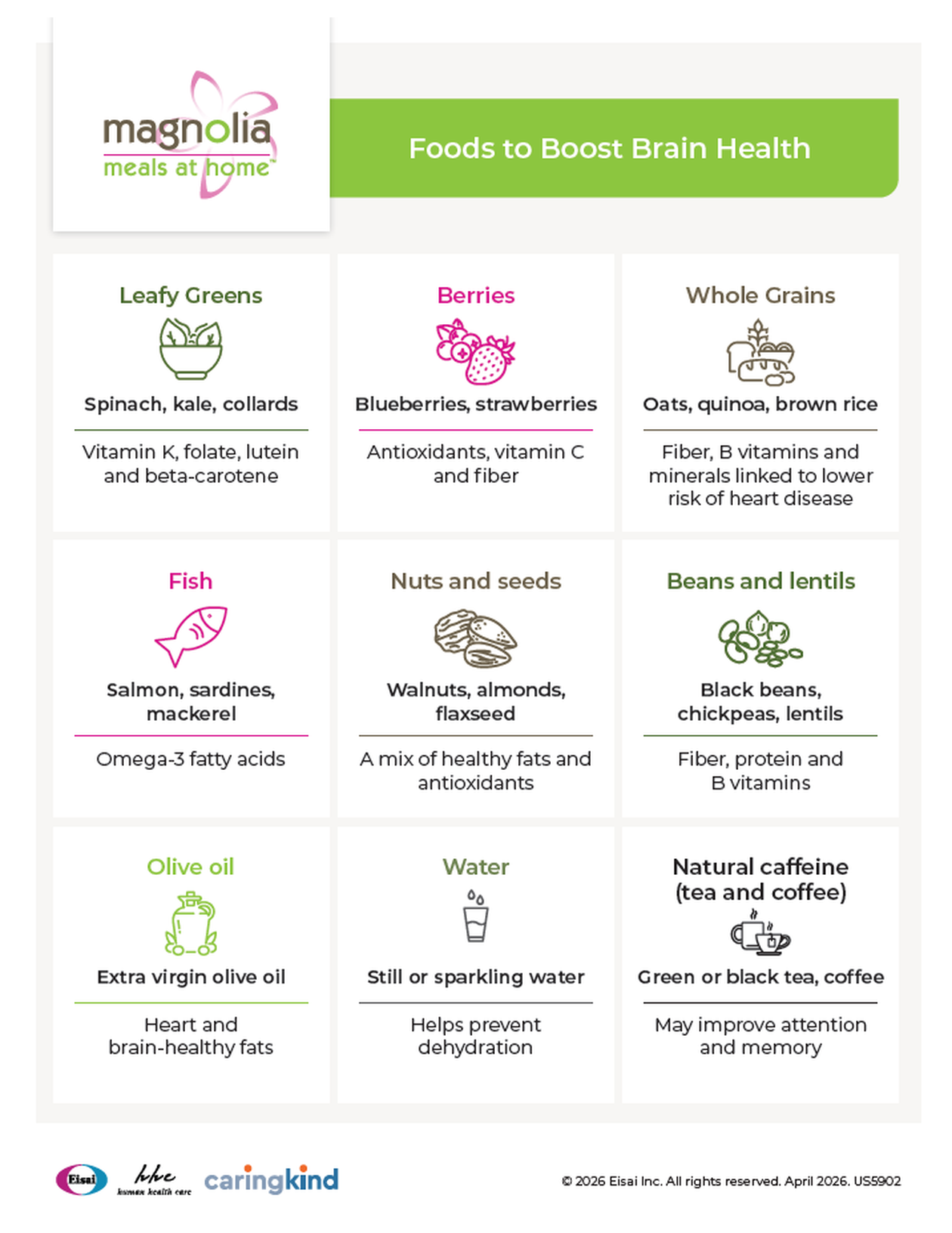
- Eating more vegetables, whole grains, healthy fats and lean meats may help lower the risk of ADRD. See the chart below for some healthy examples.

Foods to Boost Brain Health
Downloadable PDF graphic of healthy food chart

Did you know?
- Diets high in processed foods, saturated fats and sugars can harm the brain and cause issues with memory and thinking.
- Eating in ways that support heart health may also support brain health.
- Examples include the American Heart Association diet, the Mediterranean diet and the MIND diet, which may help slow memory loss and lower the risk of ADRD.
WATCH
Foods That Boost Memory Naturally and Improve Brain Power
Source: Medical Centric Podcast
Foods to Limit
- Fried or fast foods: Linked to memory problems
- Processed meats: May increase swelling and harmful irritation in the body
- Soda and sugary drinks: Raises blood sugar rapidly
- Butter and cream: Contains high amounts of unhealthy fats
- Alcohol: Memory and sleep problems
Tips to Make Healthy Eating Easier

Start with one small change, such as adding one food from the brain-healthy list above.

Drink water every few hours, even if you don’t feel thirsty.

Prep meals ahead of time. Try canned/frozen veggies to save time.

Keep healthy snacks where you can see them.

Eat with others when you can. Sharing meals can help your brain release endorphins, which are chemicals that help you feel good.